Every shared space for working on curricular content is an opportunity to inspire children and young people to create concepts, develop skills, and, above all, build meaningful connections.
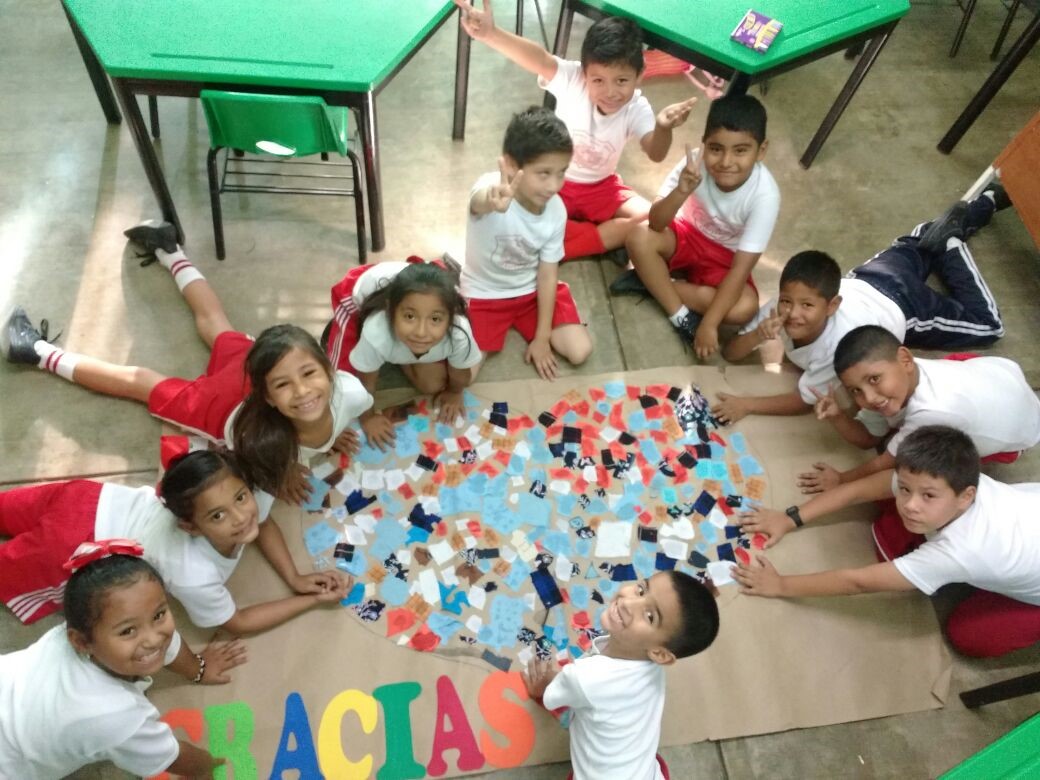
Within the Roberto Rocca After School program and the Roberto Rocca Technical School in Pesquería, Mexico, as agents of change passionate about education, we are committed to building safe learning environments. In these spaces, the purpose of every interaction with our students—regardless of the content area (STEM, Mathematics, Language, Arts, or Recreation)—is to ensure safety and emotional support, from the micro level (the classroom) to the macro level (the community).
Each shared space for working on curricular content becomes an opportunity to inspire children and young people to engage in activities that allow them to create concepts, develop cognitive skills, and, above all, live experiences that help them build connections with their peers and with the community. It is through these interactions that they practice emotional management and work on themselves.
Our students and educators thus have the opportunity to interact in environments characterized by optimism and encouragement—spaces where everyone’s voice matters, because they are the ones who build them.
A formula that never fails in the classroom: Physical safety + emotional safety = safe learning environments
Physical Safety
In terms of physical safety, we design, organize, and adapt our spaces so that students can carry out planned activities with appropriate furniture and materials suited to their stage of physical development. When necessary—as is the case in the Roberto Rocca Technical School—students use personal protective equipment (helmets, goggles, gloves, safety shoes, etc.) that allows them to work safely in classrooms and workshops.
At the same time, we promote values and habits such as cleanliness and discipline, which not only strengthen safety but also support the achievement of learning objectives.
In addition, we have protocols, procedures, and trained personnel ready to respond in case of emergencies. For example, in the Roberto Rocca After School program, we rely on the Youth Program Quality Assessment (YPQA)¹ tool, which allows us to monitor the proper use of physical spaces. Meanwhile, in the Roberto Rocca Technical School, students—together with the workshop assistant—use a Pre-Task Risk Assessment (PTRA) to evaluate the risks associated with a workplace or task before performing it. In this way, structured spaces and moments are created so that students can move around and engage in activities and experiences safely within classrooms and workshops.
Regarding psychological safety, students who experience learning with us go through one of the most important stages of human development: puberty and adolescence. This phase is characterized by change—first in physical traits, but above all in psychological ones. For many years, children have their parents as their main reference figures, shaping their identity and sense of self.
Later, during puberty and adolescence, they encounter new perceptions, doubts, and questions that lead them to seek answers not only at home but also beyond it. This process brings new sensations, emotions, and feelings, which can sometimes generate conflicts both in their relationships and in their inner world (Quiroga, 2007)². Aware of this inner adolescent world, those of us working in the Roberto Rocca After School program and in the Roberto Rocca Technical School promote specific moments within our sessions—as well as in daily interactions in hallways, cafeterias, and workshops—to develop social and emotional skills and attitudes. These include self-awareness, self-regulation, responsible decision-making, and social awareness, as well as values such as tolerance, equity, inclusion, respect, collaboration, and teamwork.
Examples include community meetings and classroom meetings, where students express their ideas and feelings and resolve both academic and personal conflicts. These spaces are also used by educators to provide support to those who need it.
To be aware of the adolescent experience and to ensure the existence of spaces like those described above, continuous training of the team is essential—through courses, workshops, certifications, talks, and more—focused on fostering safe educational environments in everyday practice. This is complemented by commitment, passion, interest, and talent as the pillars that sustain classroom work.
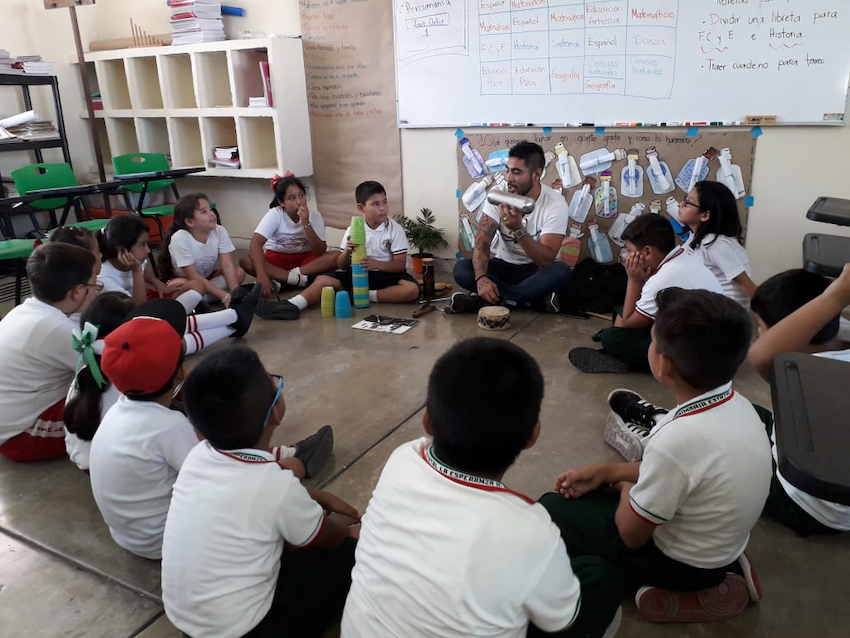
Think about how you like to be treated. Do you like to be listened to? To be considered? To have a voice? To be motivated? Recognized? To receive and provide personalized attention? To feel part of a team? The answers to these and other questions mark the first step in designing these spaces. Here lies the first key: no child or adolescent wants to be treated in a way that you yourself would not accept. Therefore, we focus on thinking, designing, and planning an atmosphere with the necessary conditions for both adults and students to learn in an environment rich in positive interactions.
Integrate the explicit teaching of socio-emotional skills and attitudes into your planning, ensuring it goes beyond paper. Identify them, self-assess, and reflect: When do they occur? Through a question? An instruction? How did your students respond? What did you learn? What did your students take away? How do these moments contribute to your classroom culture? Reflect on what happens, learn from it, and share with your peers.
Provide support and ask for support. You are not alone—you are part of a community and a network. As an African proverb says, “It takes a village to raise a child.” We can rely on fellow educators, work together with families, and collaborate with our students. Adding systems in this way is always beneficial. Likewise, we can turn to experts in socio-emotional development. Let’s make the most of available resources, adapting and applying them to our contexts.
It is important to listen to your students’ life stories in order to better understand their emotional world. Do not assume they are aware of how important they are in the classroom and in the community. Make sure this recognition is part of everyday activities, so they see themselves not only as important members of a team, but of the community. Design intentional spaces where you can get to know your students better and strengthen bonds.
Effort will pay off. Remember that the healthier our minds are, the more responsible we are toward ourselves and others. Based on this idea, let us build classrooms where learning integrates both physical and psychological safety, inspiring children and young people toward global citizenship.
Does your classroom reflect a predominantly positive emotional climate? What impact do you want to leave on your students? Do you envision them as responsible adults? How do you know?
#SafeLearningEnvironments #Education #EmotionalWellbeing #Relationships #EmotionalManagement
References
¹ The Forum for Youth Investment. (2012). Youth Program Quality Assessment (YPQA). In Sembrando ideas: Sharing strategies to foster safe learning environments. Fundación JUCONI.
² Quiroga, S. E. (2007). Adolescence: From Organic Pleasure to Object Discovery. Argentina: Editorial Universitario de Buenos Aires.
BIOS
Rubén Guevara Martínez: is an education professional and currently serves as Training Lead in the Roberto Rocca After School program for the communities of Veracruz and Monterrey (Mexico), Cartagena (Colombia), and Zalău (Romania). He has 9 years of experience identifying, through practical tools and specialized processes, areas of opportunity to improve the implementation and outcomes of STEM (Science, Technology, Engineering, and Mathematics) educational content and socio-emotional learning programs for primary school children. He supports education teams and professionals in achieving program compliance and improving the quality of both the programs and their teaching practices. He holds a degree in International Business and, for the past 10 years, has specialized in non-formal educational environments.
lidercapacitadorveracruz@gmail.com
Juan Villalobos Villa: is an education and psychology professional within the Roberto Rocca Technical Schools Network (based in Pesquería, Mexico). He serves as Student Guidance Coordinator and is also a practicing psychoanalyst in private consultation. Passionate about education and teaching, he is particularly interested in the impact of contextual and working conditions on teaching practice. He is an avid reader of psychoanalysis, philosophy, and science fiction.