Harvard Business School has selected Techint Group as the subject of a case study that explores a critical question: how can a global industrial company balance excellence and scale in its educational programs to foster sustainable community development?
For decades, Harvard Business School (HBS) has been recognized for shaping leaders capable of navigating complexity and uncertainty. Its hallmark, the case method, places students in the role of decision-makers, challenging them to analyze real-world dilemmas with incomplete information and competing priorities.
Techint Group became the focus of one such case, highlighting the growing importance of corporate social responsibility within global business strategy. The case, published in April 2025 and revised in August of the same year, is titled Techint: Strategic Choices for Community Impact and examines a decision that goes beyond financial metrics.
A pivotal question
In early 2024, Erika Bienek, Chief Community Relations Officer at Techint Group, faced a defining question: should the company invest in building a new Roberto Rocca Technical School in Veracruz, Mexico, or allocate those resources to strengthening the city’s public technical education system? At stake was not only the future of hundreds of students, but also the broader impact on a community closely tied to the Group’s industrial presence.
“Harvard Business School’s decision to include a case study on Techint Group—particularly focused on education—represents a profound recognition of our commitment to the communities we are part of,” said Bienek. “It validates that an industrial company with strong local roots can also lead meaningful educational transformation. For us, this case is not only an institutional milestone; it reinforces our long-term commitment to high-quality, innovative technical education aligned with the realities of the 21st century.”
Cecilia Bilesio, Vice President of Tamsa A.C., adds further perspective on the Group’s strategic approach: “Harvard’s decision to feature Techint in one of its emblematic cases recognizes that corporate social responsibility has been an integral part of our values and business strategy since the very beginning. We are seen as a benchmark in the business world for the professionalism and rigor with which we approach social investment in every project.”
By selecting Techint Group, HBS brings to the forefront a dilemma faced across industries: how can companies generate sustainable social impact without compromising operational excellence? Education is a field where outcomes are transformative, yet difficult to measure. For Techint, the question was never whether to invest—given its decades-long commitment to education—but how to allocate resources to maximize both reach and quality.
The strategic dilemma: scale vs. excellence
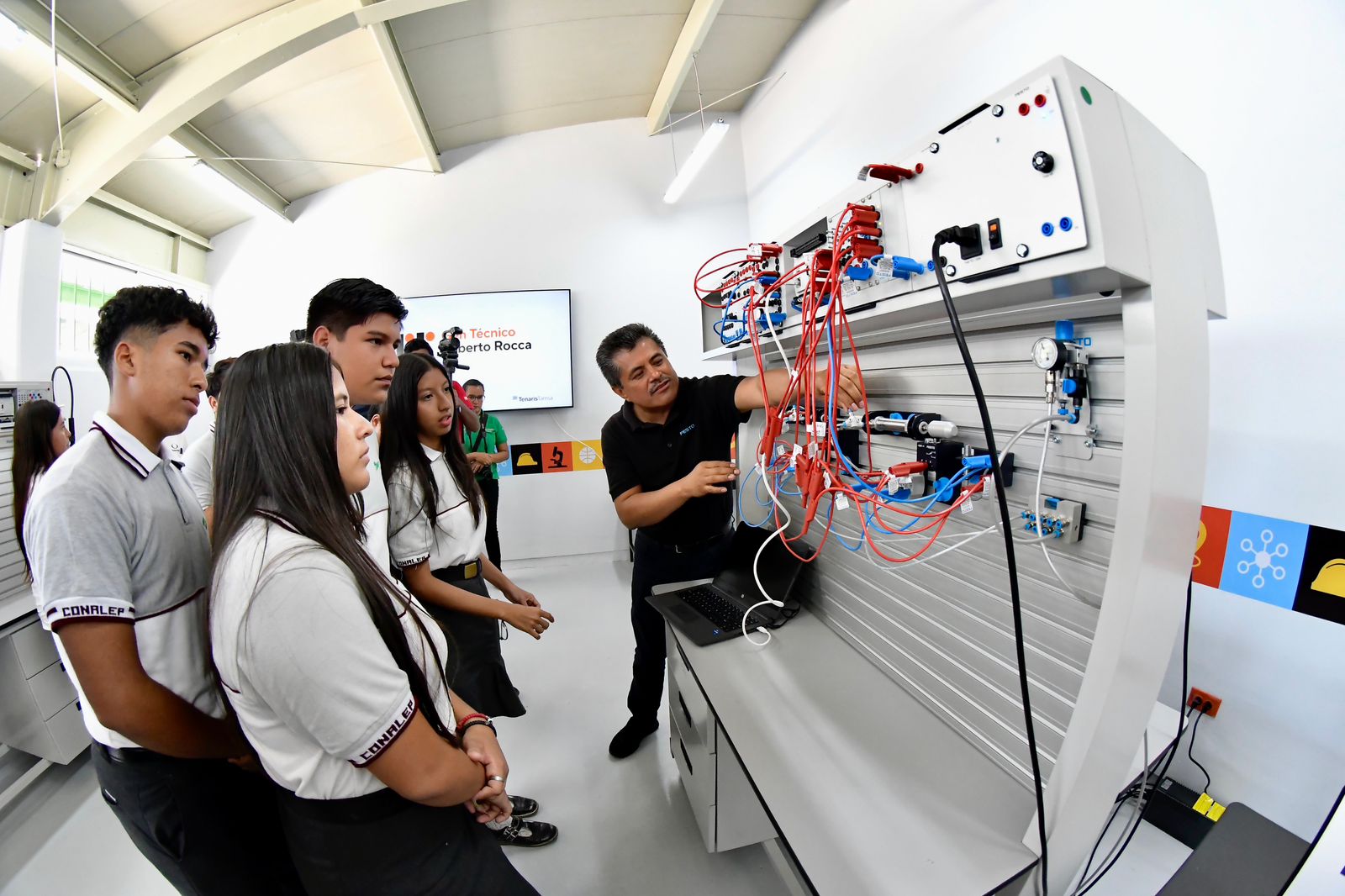
The Harvard case focuses on Veracruz, a region where Techint Group has operated for decades through TenarisTamsa. With a defined budget for community investment, the challenge was how to deploy it to achieve the greatest long-term impact.
Building a new school would allow the replication of a proven model of excellence, with state-of-the-art facilities and rigorous curricula for a limited number of students. It would also enable the company to maintain full control over quality and outcomes, creating a hub of innovation and social mobility.
“The social context, the level of education, the skills gap relative to labor market demands, and the region’s potential for economic diversification were key variables,” explained Bilesio. “Providing young people in Veracruz with the opportunity to develop the skills needed to successfully enter the workforce and contribute to their communities—while supporting industrial and technological development—is central to our objectives, our philosophy, and our long-term vision as a Group.”
However, the scale of impact would be limited: a Roberto Rocca Technical School typically serves between 400 and 500 students.
In contrast, Veracruz’s public technical education system reaches more than 40,000 students. Strengthening that system through the Roberto Rocca Technical Gene program could generate broader impact, though with less control and more gradual results.
A third alternative also emerged: creating a community training center focused on reskilling and upskilling local workers and educators, aligned with the demands of Mexico’s growing energy sector.
Each option involved trade-offs between depth and reach, control and collaboration, immediate visibility and systemic change.
Education is a key driver of social development. Skilled talent is essential for industrial competitiveness, and social mobility strengthens the communities where companies operate. However, education is inherently a long-term process—one that requires patience, vision, and sustained commitment.
Techint’s approach combines proprietary initiatives with strategic partnerships, leveraging its experience to set high standards while scaling impact through collaboration with public institutions. This dual strategy recognizes that no single actor can drive systemic change alone: alignment between companies, governments, and civil society is essential—a lesson that extends far beyond the case of Veracruz.
“We believe in continuous improvement; that is why we measure and evaluate our programs,” Bienek explains. “We analyze hard indicators such as graduation rates and assessment results, but we also track job placement, continued education, employability, and, above all, the level of personal and community transformation generated by each program. Our goal is to develop well-rounded individuals capable of building a sustainable life project.”
To access more details about the case study, please click here (the case is paid and available in English only).